Updates
The best GLP-1 injection site for weight loss
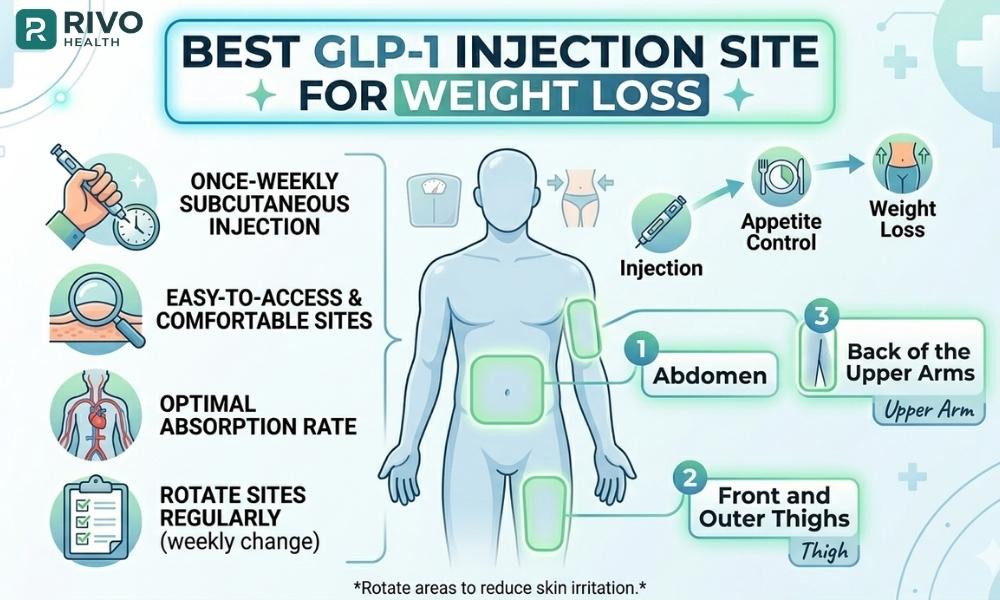
The abdomen is the most common GLP-1 injection site because of its large surface area and easy access. However, clinical studies confirm the thigh and back of the upper arm are equally effective for weight loss. To prevent tissue damage and maintain steady medication absorption, you must rotate your injection sites every week.
Starting a new medical weight loss program is a significant step toward improving your overall well-being. When you receive your first prescription for GLP-1 medications, such as Semaglutide or Tirzepatide, you might feel slightly unsure about the injection process. Many patients wonder if placing the needle in a specific spot will accelerate their progress or minimize discomfort.
Finding the right location on your body is essential for a smooth and comfortable experience. The FDA approves three specific areas for subcutaneous injections, meaning the medication is delivered into the fat layer just beneath your skin. While all three zones work effectively, subtle differences in tissue thickness and accessibility make some spots better suited for certain individuals.
This guide provides expert guidance at your fingertips, exploring the clinical data behind each approved injection area. You will learn how to choose the most comfortable location, why rotating your sites is a medical necessity, and how to secure your health journey with trusted medical professionals.
How subcutaneous GLP-1 absorption works
GLP-1 weight loss injections are designed to be administered subcutaneously. The fat layer beneath your skin acts as a slow-release reservoir. When you inject medications like Semaglutide or Tirzepatide into this tissue, the active ingredients gradually enter your bloodstream over several days. According to clinical pharmacokinetic studies, Semaglutide has an 89% subcutaneous bioavailability, which ensures a steady reduction in appetite.
Injecting into muscle tissue by mistake forces the medication to absorb too rapidly. This rapid absorption can lead to inconsistent blood levels and a sudden spike in side effects. Therefore, selecting an area with an adequate layer of subcutaneous fat is critical for your safety and success.
Which GLP-1 injection site should you choose?
Your body composition and personal mobility dictate which location will work best for your weekly routine. The FDA approves the abdomen, the front of the thigh, and the back of the upper arm for GLP-1 administration.
Is the abdomen the best GLP-1 injection site?
The abdomen is the most widely recommended area for self-injection. Most adults have a consistent layer of subcutaneous fat around their stomach, making it easy to pinch the skin and administer the dose safely. Because it offers the largest surface area, you have plenty of room to move the needle to a fresh spot each week.
Clinical studies indicate that the abdomen provides slightly faster absorption. Research comparing the sites shows that the thigh has roughly 12% lower bioavailability than the stomach. However, this minor difference does not impact your long-term weight loss results. Choose the abdomen if you want the easiest visual access and a straightforward self-injection process.
Should you inject GLP-1 medications into your thigh?
The front of the thigh is an excellent alternative for individuals who experience local sensitivity around their stomach. Injecting into the thigh is often more comfortable because you can sit down in a chair, which relaxes the underlying muscle and stabilizes your hands.
Choose the thigh if you feel anxious about injecting near your midsection or if you are traveling and need a discreet, seated option. You should aim for the front or outer-front section of the upper thigh, avoiding the inner thigh where blood vessels sit closer to the surface.
When is the upper arm a good option?
The back of the upper arm is the third approved location. The main challenge with this site is that it requires an awkward angle for self-administration. Most patients struggle to pinch the skin on the back of their own arm while holding the injection pen at a strict 90-degree angle.
Choose the upper arm only if you have a partner or caregiver available to assist you. It serves as a helpful backup location to give your stomach and thighs a chance to heal, but it is rarely the best choice for independent daily use.
Does the injection site change GLP-1 side effects?
A common myth suggests that injecting your medication into the thigh will prevent gastrointestinal distress. Clinical data shows that side effects like nausea are systemic, meaning they originate from the medication interacting with your brain and digestive tract, not from the local puncture wound.
According to safety data from Eli Lilly, approximately 43.6% of participants taking Tirzepatide and 44.4% of participants taking Semaglutide experienced nausea during clinical trials. Changing your injection site will not reduce this systemic nausea. However, changing sites will reduce local skin irritation. If your stomach feels bruised or tender from repeated injections, moving to the thigh will alleviate that specific surface discomfort.
Why you must rotate your injection sites
Using the exact same spot on your body every week leads to a medical condition called lipohypertrophy. This condition causes the fat tissue under your skin to become thick, hard, and rubbery. When you inject GLP-1 medications into damaged fibrotic tissue, the drug cannot absorb at a predictable rate.
To maintain efficacy, you must implement a strict rotation schedule. Move the injection at least one inch away from your previous puncture mark every week. A standard rotation pattern involves alternating between the left side of your abdomen, the right side of your abdomen, the left thigh, and the right thigh. This cycle ensures each patch of skin receives nearly a month of recovery time before being used again.
Secure your health journey with Rivo Health
Your health, our priority. Navigating the world of medical weight loss requires more than just a prescription; it requires personalized care from trusted medical professionals. Rivo Health offers US-based adults a secure and reliable platform to assess their eligibility for GLP-1 treatments.
Our online assessments are protected by strict privacy protocols, ensuring your sensitive data remains completely confidential. If you qualify for medications like Semaglutide or Tirzepatide, our team will provide a tailored treatment plan shipped discreetly to your door. Take the first step toward a healthier lifestyle by completing your secure online assessment today.
Frequently Asked Questions
Are GLP-1 weight loss injections safe?
GLP-1 medications are generally safe when prescribed by qualified healthcare providers and used according to clinical guidelines. Common risks include gastrointestinal side effects like nausea, vomiting, and diarrhea. You should complete a thorough medical assessment to ensure these medications do not conflict with your personal medical history.
Who qualifies for online GLP-1 prescriptions?
Adults seeking weight management solutions who meet specific Body Mass Index (BMI) criteria typically qualify for GLP-1 therapy. Rimo Health clinicians use strict exclusionary criteria to screen patients safely. You must complete a secure online medical intake form to determine your clinical eligibility.
How long does it take to see weight loss results?
Most patients begin to notice changes in their appetite within the first few weeks of starting a GLP-1 medication. Visible weight loss generally occurs within the first month, with the average Rivo Health patient losing 9 pounds during their first four weeks. Consistent results require adherence to the prescribed dosage and a healthy lifestyle.
What are the alternatives if I do not qualify for GLP-1 injections?
If our medical experts determine that GLP-1 medications are not appropriate for your health profile, Rivo Health provides comprehensive support for alternative treatments. Your clinician may guide you toward other metabolic support options, personalized nutrition plans, or different wellness programs tailored to your specific needs.
How much do GLP-1 medications cost with telehealth?
Prices vary depending on the specific medication and subscription plan. Rivo Health offers compounded Semaglutide starting at $149 per month and compounded Tirzepatide starting at $199 per month when bundled with an annual plan. These memberships include the cost of the medication, unlimited provider visits, and dietary coaching.
Author:


Contact us
hello@rivohealth.co

*Our success rate reflects recent internal fulfillment and delivery performance for paid orders during the current quarter. Rates may vary based on pharmacy capacity, state regulations, and individual order details. This figure does not represent clinical outcomes or individual results and is subject to change as new data becomes available. Written prescription or weight loss results are not guaranteed.
1309 Coffeen Avenue STE 1200
Sheridan Wyoming 82801
1 (800) 705-8140